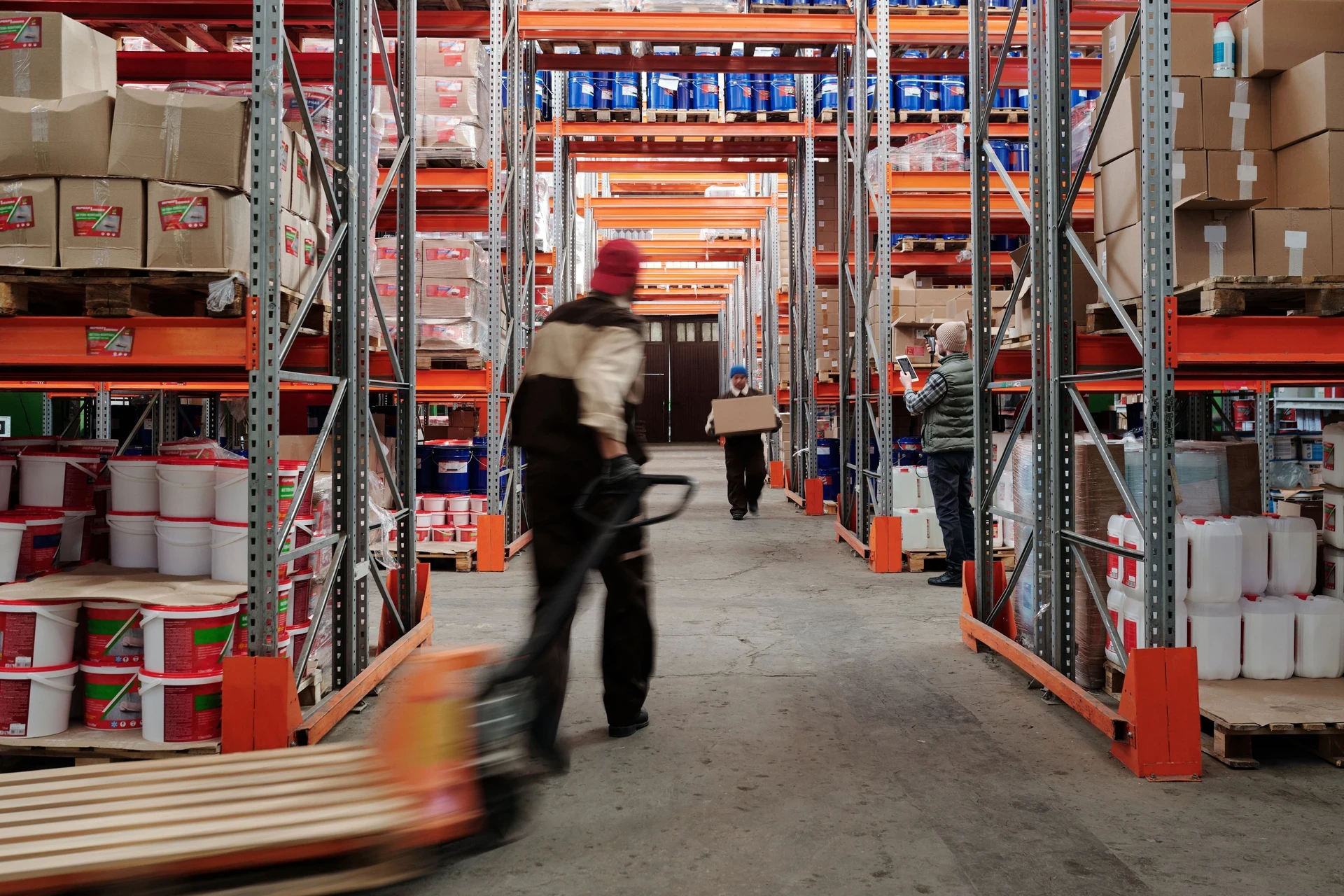
The machine parts whose transport we track via the Port of Hamburg take five weeks by sea. Most of the time, that's not a problem. But sooner or later, every importer receives a call that makes it clear: a production line is at a standstill, a crucial spare part is missing, and a five-week wait is no longer an option.
Air freight is designed precisely for such situations. For imports to Germany or Poland, it is rarely the first choice due to the significantly higher costs compared to sea freight. But when every hour counts, understanding the processes can be crucial to prevent a difficult week from turning into a complete production shutdown.
Frankfurt, Hamburg, and Warsaw: The Key Air Freight Hubs
Frankfurt Airport is one of the most important transshipment hubs for air freight destined for Germany. In 2025, around two million tons of freight were handled there. This made Frankfurt one of Europe's largest cargo airports for most of the year. In the first half of 2026, Istanbul temporarily overtook Frankfurt after disruptions in the Middle East led to a shift of cargo volumes to Turkish routes.
Frankfurt's importance, however, is not based solely on cargo volume, but above all on its international connectivity. Around 94 airlines connect the airport with more than 300 destinations. This ensures dense cargo flight schedules and extensive cargo capacities in the bellies of passenger aircraft on long-haul routes from Asia and North America.
Hamburg Airport plays in a different league when it comes to pure cargo volume. Its Cargo Center handled around 65,000 tons of freight in 2024—almost 40% more than in the previous year. Nevertheless, Hamburg remains an important air freight location for northern Germany. For importers who already handle their sea freight via the Port of Hamburg, the airport is an obvious choice when part of the shipment needs to be transported faster than the rest.
Warsaw Chopin Airport performs a comparable role for Poland. Around two-thirds of Polish air freight is handled through it, with annual freight volumes regularly exceeding 100,000 tons. This makes it the main entry point for air freight shipments to and from Poland—from Warsaw to Wrocław and Kraków to other regions of the country.
In addition, Poland is planning a new central transport hub with the Centralny Port Komunikacyjny (CPK) near Baranów. In the long term, it is intended to create additional cargo capacity for the growing e-commerce and industrial sectors. However, its realization is still expected to take several years.
Which airport makes the most sense for a shipment often depends more on the final destination than on national borders. For example, a shipment to Wrocław or western Poland can land in Frankfurt and be transported onward by truck within a day. Freight to Warsaw or regions further east, on the other hand, is often faster to process directly via Poland.
A good freight forwarder therefore optimizes the total door-to-door transit time—not just the distance to the nearest airport.
How Does Air Freight Work via German and Polish Airports?
The central document of an air freight shipment is the Air Waybill (AWB). It fulfills a similar function to the bill of lading process in ocean freight and is issued after booking and acceptance of the cargo at the origin.
Unlike sea freight, price calculation in air freight is generally based on chargeable weight rather than exclusively on actual weight. The airline compares the actual weight with the volumetric weight. A common benchmark is one cubic meter of volume for approximately 167 kilograms. The higher value is billed.
For light, bulky goods, this can mean that the importer pays for the cargo volume occupied, even though the shipment weighs comparatively little.
Before the freight even reaches the airport, several steps are required. The goods are transported by truck to the freight forwarder's or handling agent's warehouse, checked against the packing list, security screened, and assembled into a Unit Load Device (ULD). These are specialized pallets and containers designed for the cargo hold of an aircraft.
Export customs declarations are also processed during this phase. Shipments that must meet specific security requirements require corresponding security screening within the supply chain. Established freight forwarders therefore often work with regulated known consignors, rather than subjecting every shipment to a full security check right at the airport.
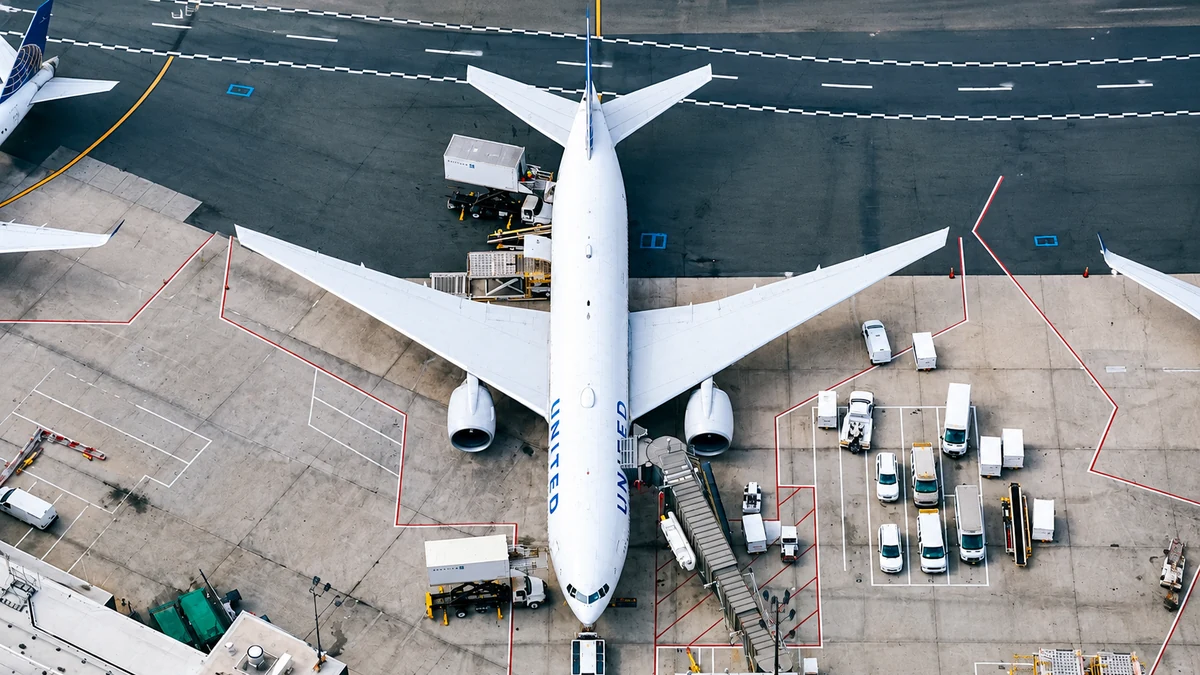
The actual air transport takes place either on a dedicated cargo aircraft or in the belly hold of a passenger aircraft. The shipment can be booked directly or consolidated with freight from other forwarders to use available cargo space more efficiently.
After landing, a process follows that is similar in its fundamentals to sea freight: import customs clearance is carried out, customs duties and import VAT are paid or deferred to the extent permitted by law, and after release, the freight forwarder or transport company handles delivery.
The decisive advantage of air freight is the short overall transit time. From booking to delivery, door-to-door transit typically takes three to seven days for many shipments. A sea freight shipment from Asia, on the other hand, often requires five to six weeks.
For more information about our services, please visit our Air Freight Solutions from NTL Forwarding page.
When Is Air Freight Worth It Instead of Sea Freight to Germany or Poland?
The honest answer is: not very often—and that makes perfect sense. Per kilogram, air freight typically costs several times more than sea freight, often around eight to twelve times as much. It is therefore mainly worthwhile when the cost of a delay exceeds the additional transport costs.
In many calculations, a shipment size of around 500 kilograms serves as a rough rule of thumb. For smaller shipments, the speed advantage of air freight can be particularly worthwhile. For heavier shipments, ocean freight or an alternative rail link often becomes more economical.
The most compelling use cases are:
Urgent spare parts: When a missing component brings a production line to a halt, fast delivery can prevent significant downtime and consequential costs.
High-value electronics: For expensive goods, tied-up capital and inventory costs during a long sea transit can be considerable.
Perishable goods: Products with a limited shelf life or special temperature requirements may necessitate fast transport.
Contractually critical deliveries: When contractual penalties, production losses, or lost sales exceed the extra cost of air freight, the faster transport option is often more economical.
Bulky, heavy, or non-time-critical goods, on the other hand, are usually better off traveling by sea.
There is also an interesting middle ground: rail freight from China to Europe, for example via Duisburg. This can be about twice as fast as sea freight and generally costs significantly less than air freight. For shipments that are not urgent enough for a flight but cannot withstand a six-week sea voyage either, it is worth comparing with our Overland Freight and Rail Transport Solutions.
Air Freight Costs to Germany and Poland
Air freight prices experienced unusually high volatility in 2026. In early 2026, freight rates from China to Europe surged by more than 75% after disruptions in the Middle East constrained globally available air freight capacity. Later in the year, prices eased again.
For planning standard freight from China to Germany, a guideline value of around 4 to 9 euros per chargeable kilogram was assumed in mid-2026. Many airlines also charge a minimum freight fee of around 40 to 80 euros, even if the shipment is very small.
However, this base price rarely reflects the total transport costs. Fuel and security surcharges can account for an additional 20 to 40%. Taken together, surcharges can make up 30% or more of the final bill.
An example illustrates the calculation: a 300-kilogram electronics shipment from Shanghai at a freight rate of 6 euros per chargeable kilogram initially incurs 1,800 euros in pure air freight costs. Surcharges, customs clearance, and last-mile delivery are then added on top.
The stated price per kilogram is therefore only part of the overall calculation.
As with sea and road transport, quotes should always be compared based on a detailed cost breakdown. This should separately show at least the following line items:
Base freight rate
Calculation of chargeable weight
Fuel, security, and other surcharges
Customs clearance fees
Final delivery charges
A transparent quote allows for a realistic comparison, whereas a single flat-rate price can obscure significant cost differences.
Customs Clearance for Air Freight in Germany: What Do Importers Need to Consider?
Import customs clearance for air freight in Germany is generally handled via the same relevant customs procedures and the electronic ATLAS system as with sea freight via Hamburg. An EORI number is also required for most commercial customs operations. Instead of the bill of lading, the Air Waybill serves as the central transport document in air freight.
For an ordinary commercial import, the customs declaration is submitted. The applicable customs duties and German import VAT are then paid or—if the legal requirements are met—deferred. After successful clearance, the goods are released to the consignee.
One change deserves special attention, regardless of shipment size: since July 1, 2026, the EU has abolished the previous customs duty exemption for shipments with a goods value of up to 150 euros. For shipments up to this value, a flat customs rate of 3 euros per tariff item now applies. An additional EU-wide handling fee was expected for later in the year.
The change affects e-commerce and smaller parcel shipments in particular, which are frequently transported by air. Companies importing mixed shipments with items of varying value should therefore check how the new regulations impact their actual landed costs.
For more information on the process, please visit our Customs Clearance Services.
How to Book Air Freight to Germany or Poland?
Booking is usually done through a freight forwarder rather than directly with an airline. Forwarders aggregate freight volumes from various clients to negotiate better terms. At the same time, they can offer consolidated transport capacity when a shipment does not require a full unit load device.
Because capacity was heavily utilized at times in 2026, booking one to three weeks in advance can offer clear advantages in terms of price and reliability compared to short-notice bookings.
The required documentation is generally manageable:
Commercial invoice with relevant commodity and value details
Packing list detailing packages, weights, and dimensions
EORI number, where required for customs clearance
The forwarder then coordinates the Air Waybill and the necessary customs declarations.
NTL Forwarding organizes air freight shipments via Frankfurt, Hamburg, and Warsaw as part of a coordinated logistics offering that also encompasses sea and land freight. Clients benefit from a single point of contact, a transparent cost breakdown including base freight rate and surcharges, and coordinated customs clearance upon arrival.
This keeps the focus on what matters most: the reliable delivery of goods to their final destination.
Looking for a fast and reliable air freight solution to Germany or Poland? Contact NTL Forwarding to receive a personalized quote and find the right transport solution for your shipment.